A T-bone collision can leave you with serious injuries, painful medical treatments, and weeks or months away from work. Meanwhile, the driver who hit you may insist they had the right of way, leaving you to deal with an insurance dispute while worrying about your recovery and mounting expenses.
A Rancho Cucamonga T-bone accident lawyer at Miracle Law can investigate what happened, establish who was responsible, and fight for compensation for your injuries and losses.
Led by Tamar Miot, a former insurance defense attorney, our team understands how insurers try to shift blame after intersection accidents. Our car crash lawyers will gather evidence, handle the insurance company, and keep you informed throughout your case. You’ll have an attentive legal team that takes your concerns seriously and works to make this difficult time more manageable.
What Is a T-Bone Accident?
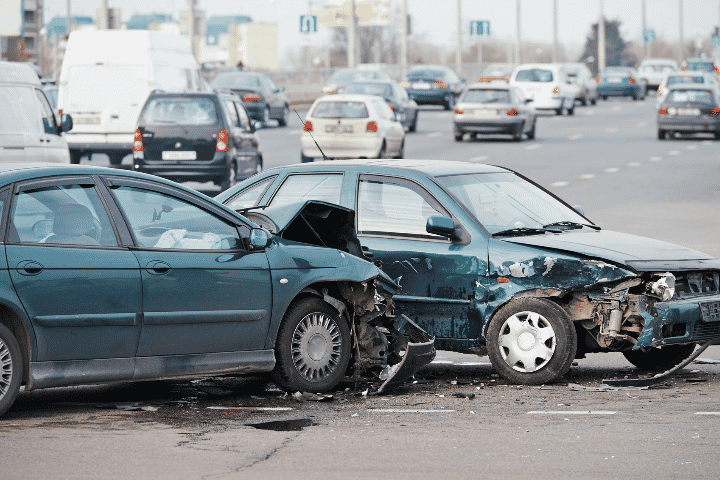
A T-bone accident occurs when the front of one vehicle crashes into the side of another, forming a rough T shape. These collisions are also called side-impact crashes and frequently occur at intersections when drivers cross or turn into oncoming traffic.
Side-impact crashes can cause particularly serious injuries because vehicle doors provide less space to absorb collision forces than the front or rear of a car. Even when side airbags deploy, occupants may suffer significant injuries.
Determining right-of-way accident fault is often complicated because both drivers may insist they were allowed to proceed. The location of the damage alone cannot establish responsibility. Investigators must examine the traffic signals, each driver’s actions, and the circumstances leading to the impact.
How Do T-Bone Accidents Happen?
Common causes of a T-bone collision include:
- Running red lights. Drivers who enter an intersection against a red light can strike vehicles traveling through on green. California law requires drivers facing a steady red light to stop before entering the intersection.
- Failing to yield during left turns. A driver turning left across oncoming traffic must yield to approaching vehicles that present a hazard.
- Ignoring stop signs. Drivers must stop at stop signs and yield to approaching vehicles when required. Rolling through a stop sign can place a vehicle directly into another driver’s path.
- Distracted or impaired driving. Using a handheld phone or driving under the influence can prevent drivers from noticing traffic signals, approaching vehicles, or pedestrians before entering an intersection.
An intersection accident attorney in Rancho Cucamonga can examine the circumstances of the collision to establish responsibility and challenge conflicting accounts from the other driver or their insurer.
What Are Common Injuries from Side-Impact Crashes?
A T-bone collision can force the side of your vehicle inward, striking your body and causing serious injuries.
Common injuries include:
- Head and brain injuries. Occupants may strike a window, door, or another interior surface, causing concussions, traumatic brain injuries, or lasting cognitive problems.
- Neck and spinal injuries. Sudden sideways movement can strain the neck or damage spinal discs, potentially causing chronic pain, weakness, or nerve symptoms.
- Rib and chest injuries. Direct pressure from an intruding door or seat belt can cause rib fractures, lung injuries, or other chest trauma.
- Hip, pelvis, and leg injuries. A side impact may damage the lower body, especially when the vehicle’s door or frame pushes inward.
- Shoulder and arm injuries. Occupants may suffer fractures, dislocations, or soft tissue injuries when their bodies strike interior surfaces.
Some injuries require surgery, rehabilitation, or long-term treatment. A side impact collision lawyer in California can review your medical records and work with your providers to establish the extent of your injuries and how they affect your ability to work and manage daily responsibilities.
How Do I Prove a T-Bone Accident Claim?
To prove a T-bone accident claim, you generally must establish that another driver’s negligence caused the collision and your resulting injuries.
California negligence claims involve four essential elements:
- Duty of care. The other driver had a legal responsibility to operate their vehicle with reasonable care and obey applicable traffic laws.
- Breach of duty. The driver violated that responsibility by running a red light, failing to yield, speeding, or engaging in another unsafe action.
- Causation. You must show that the driver’s negligent conduct caused the collision and the injuries for which you seek compensation.
- Damages. You must establish losses resulting from the accident, such as medical expenses, lost income, property damage, and pain and suffering.
At Miracle Law, we connect these elements using collision evidence, medical documentation, and applicable California traffic laws. The goal is to show how the other driver’s conduct led to the crash and the harm you suffered.
What If Both Drivers Share Fault?
California follows a pure comparative negligence rule. You can pursue compensation even if you contributed to the collision, although your recovery is reduced by your percentage of fault.
For example, if you were found 20% responsible, your recoverable damages would generally decrease by 20%.
Insurance companies may try to shift some of the blame onto you to reduce the compensation they have to pay. We examine the evidence, challenge unfair fault assessments, and work to protect your right to fair compensation.
How Do You Determine Right-of-Way Accident Fault?
Determining who had the right of way requires examining what each driver was legally permitted to do immediately before the collision. This can be difficult when drivers give conflicting accounts or no one witnessed the entire event.
Traffic Signals and Intersection Conditions
Traffic signals help establish whether a driver had permission to enter an intersection. However, the precise timing matters, particularly when a signal changes from yellow to red.
At intersections such as Foothill Boulevard and Haven Avenue, investigators may examine lane markings, turning movements, and available traffic signal records.
We can seek signal timing information where available to understand how the lights operated. These records may establish the normal signal sequence, although they do not necessarily prove which light was illuminated when the collision occurred.
Witness Statements
Independent witnesses may help establish who entered the intersection first, whether a driver violated a traffic signal, or how the collision occurred.
We review police reports, contact witnesses, and assess their accounts to help establish the other driver’s responsibility, especially when the drivers give conflicting statements.
Camera Footage
Footage from nearby businesses, dashcams, or available traffic monitoring systems may provide further evidence.
However, not every traffic camera records video, and business surveillance systems may overwrite footage quickly. Our seasoned legal team works to identify potential recordings and request preservation before that evidence disappears.
How Can a Side-Impact Collision Lawyer in California Help Me?
We can manage your injury claim, protect your interests during insurance negotiations, and pursue compensation that accounts for the harm you’ve suffered.
Protecting You from Insurance Company Tactics
Insurers may dispute fault, question your injuries, or pressure you to settle before your future medical needs are clear.
We handle requests for statements and records, challenge unfair assessments with evidence, and negotiate on your behalf to pursue fair compensation.
Calculating the Full Value of Your Damages
Your losses may extend beyond emergency treatment, particularly if your injuries keep you out of work.
We assess:
- Medical expenses,
- Lost wages,
- Reduced earning capacity,
- Vehicle repair or replacement costs,
- Physical pain and emotional suffering,
- Long-term disability and daily limitations, and
- Loss of enjoyment of life.
We wait until you reach maximum medical improvement before finalizing the value of your claim. At that point, your doctors can better assess any lasting limitations and future treatment needs, helping us pursue compensation that reflects the full impact of your injuries.
Managing Your Case While Supporting Your Recovery
We handle the paperwork, insurance communications, and deadlines so you can concentrate on your health and family. Our team keeps you informed, answers your questions, and helps you understand your options before making important decisions about your claim.
Representing You in Court
If the insurance company refuses to offer a fair settlement, we can take your case to court. Our attorneys handle the legal filings, present evidence, question witnesses, and advocate for you before a judge or jury. We’ll explain what to expect and prepare you for each stage of the proceedings.
How Long Do I Have to Bring an Intersection Accident Claim in California?
California generally gives you two years to file a personal injury lawsuit after an intersection accident. Missing the applicable deadline can prevent you from recovering compensation through a lawsuit, even if the insurance company is still reviewing your claim.
If a dangerous road condition or malfunctioning traffic signal contributed to the collision, you may need to file a government claim within six months.
Our attorneys can determine which deadlines apply and take the necessary steps to protect your claim.
Speak with an Intersection Accident Attorney in Rancho Cucamonga
When another driver’s negligence has left you injured, the insurance claim should reflect the full consequences of the collision, including the treatment you need and the income you’ve lost.
At Miracle Law, our team brings more than 25 years of combined legal experience and has recovered over $25 million for injured clients. We understand how important reliable legal support is when your health and financial stability are at stake.
We’re available 24/7, and Tamar Miot speaks Spanish. We offer free consultations and handle injury cases on a contingency fee basis, so you pay no attorney fees unless we recover compensation for you.
Contact a Rancho Cucamonga T-bone accident lawyer at Miracle Law today and let us explain your legal options.
Legal References Used to Inform This Page
To ensure the accuracy and clarity of this page, we referenced official legal and other resources during the content development process:
- Offenses Relating to Traffic Devices, Cal. Veh. Code § 21453 (2023).
- Right-of-Way – Left Turn, Cal. Veh. Code § 21801 (1993).
- Right-of-Way – Stop Sign, Cal. Veh. Code § 21802 (1988).
- Special Stops Required, Cal. Veh. Code § 22450 (2008).
- Driving Offenses – Use of Handheld Device, Cal. Veh. Code § 23123.5 (2018).
- Offenses Involving Alcohol and Drugs, Cal. Veh. Code § 23152 (2017).
- The Time of Commencing Actions Other Than for the Recovery of Real Property, Cal. Civ. Proc. Code § 335.1.
- Government Claim Filing Deadline, Cal. Gov. Code § 911.2 (2016).
 Español