
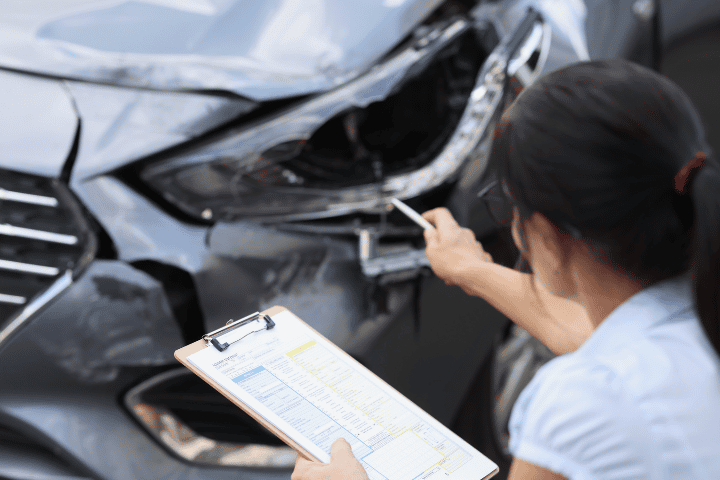
An officer may have taken your statement, and your insurer may already have a claim number. But do you have to report a car accident in California to the DMV, too? Yes, generally within 10 days if anyone was injured or killed, or damage to any one person’s property exceeded $1,000. A police report does not replace this filing.
At Miracle Law, APC, we help injured Californians address reporting requirements while pursuing compensation. Our team brings 25 years of combined legal experience, and our founder, Tamar Miot, previously represented insurance companies. Our car accident law firm understands that paperwork can feel especially burdensome when pain interrupts your sleep and treatment takes you away from work.
Contact us for a free consultation about your next steps.
Key Takeaways
- Mandatory DMV Reporting (SR-1): You must report an accident to the California DMV within 10 days if anyone was injured or killed, or if property damage exceeds $1,000.
- Police Reports Are Separate: Filing a police report or having an officer at the scene does not satisfy your legal requirement to file an SR-1 form with the DMV.
- Law Enforcement Deadlines: Injuries or fatalities require a written report to law enforcement (CHP or local police) within 24 hours if officers did not investigate at the scene.
- Risk of License Suspension: Failing to file an SR-1 or failing to maintain required financial responsibility (insurance) can result in driving privilege suspension.
- Insurance Notification: Promptly notify your insurer, but ensure factual accuracy to protect your rights during claim settlement.
CVC Accident Reporting Requirements: When Must You Notify the Police or CHP?
Call 911 promptly when someone is injured, someone has died, or the collision creates an immediate danger. For a nonemergency, contact the appropriate law enforcement agency through its nonemergency line.
Crashes Involving Injury or Death
California Vehicle Code generally requires a written report within 24 hours after an injury or fatal accident. Submit it to the California Highway Patrol (CHP) or, when the crash occurs within a city, that city’s police department.
If an officer responds, ask whether they are preparing a written collision report and obtain the report number. If nobody prepares one, contact the agency about submitting the required written report yourself.
Crashes Involving Only Property Damage
The CVC accident reporting requirements include duties at the scene, even when no one is hurt. You must stop at the nearest safe location that does not obstruct traffic and exchange the required identifying information. If you damage an unattended vehicle or other property and cannot locate the owner, leave a visible note identifying yourself and the vehicle owner, with addresses and an explanation of what happened. You must then notify local police or CHP, as appropriate, without unnecessary delay.
Reporting a Car Accident to the DMV in California: When Must You File an SR-1 with the DMV?
You must file an SR-1 within 10 days after a reportable collision, regardless of who caused it. This duty applies separately from any insurance claim and is effective in accidents involving:
- Any injury or death. Even a minor injury counts, including injuries to a passenger, pedestrian, or bicyclist. The requirement does not depend on whether anyone needed an ambulance.
- Property damage exceeding $1,000. This means damage to any one person’s property, including your own. It does not mean your deductible or the amount you personally expect to pay.
Each driver must submit a report or have an authorized representative do so on their behalf. The other driver’s filing does not replace yours.
The deadline runs from the date of the accident, not from the date an insurer accepts responsibility. Start gathering the necessary information promptly rather than waiting for the claim investigation to finish.
How Do You Complete and Submit the DMV Report?
Submit the California SR-1 form through the DMV’s online accident-reporting service or mail a completed paper copy to the address in its instructions:
Department of Motor Vehicles
P.O. Box 942884
Sacramento, CA 94284-0884
Have your records nearby so you can accurately identify the people and vehicles involved:
- Your information. Enter your full name, address, phone number, and applicable driver’s license details. Identify whether you were a driver, pedestrian, or bicyclist.
- Your vehicle. Provide the year, make, license plate number or vehicle identification number (VIN), registration state, and the owner’s name and address.
- Accident details. Record the date, time, city or county, and whether the crash occurred on private property. Indicate whether vehicles were moving, stopped in traffic, or parked.
- Other party’s information. Include their name, address, phone number, driver’s license details, vehicle and owner information, and available insurance details.
- Injuries and deaths. Identify anyone injured or killed by name, address, and role, such as driver, passenger, pedestrian, or bicyclist.
- Property damage. Indicate whether each vehicle’s damage exceeded $1,000. Describe other damaged property, identify its owner, and indicate whether that damage exceeded $1,000.
- Insurance information. Provide your liability insurer’s name, policyholder, policy number, and coverage dates. Check whether the policy covered your vehicle and was active when the crash occurred.
The form’s instructions permit “unknown” entries when you lack information about the other party. This matters after a hit-and-run: you can report the collision without waiting for investigators to identify the driver.
Complete your own insurance information carefully. The DMV uses it to check coverage, and missing details can create questions about whether you were insured.
Do not wait for the police report before filing. A collision report can take longer than 10 days to become available, so the two processes need to move forward separately.
Must You Notify Your Insurance Company Too?
Yes, notify your insurer promptly and follow your policy’s reporting and cooperation requirements. The California Department of Insurance recommends immediate notification. The DMV’s deadline is not permission to wait 10 days before contacting your insurer.
Give an accurate account of what you know. Explain when details remain uncertain rather than estimating speeds or accepting the other driver’s description as fact. Save your claim number and written communications.
Your insurer may request a statement or supporting documents during its investigation. At Miracle Law, we help clients respond to those requests and take over insurer communications once retained. Reporting the accident should not require you to negotiate your injury settlement while you are still trying to understand your treatment needs.
What Happens If You Do Not Report the Accident?
Failure to submit a required DMV report can lead to suspension of your driving privilege, even when you did not cause the collision. Other consequences depend on which duty was not met.
Suspension for Lack of Insurance
An accident report can trigger a DMV review of whether you had liability insurance or another accepted form of financial responsibility when the crash occurred. Failing to establish that coverage can lead to a license suspension, even if you reported on time and did not cause the accident.
Being uninsured does not remove your obligation to submit a required SR-1, and buying insurance afterward does not establish coverage for the earlier crash. If you had coverage but received a suspension notice, respond promptly with proof that it covered you and the vehicle on the accident date.
Criminal Charges for Hit-and-Run
Leaving the scene without fulfilling duties to stop, provide identifying information, and render reasonable assistance to anyone injured can result in hit-and-run charges. A property-damage hit-and-run is a misdemeanor, while one involving another person’s injury or death can lead to felony charges.
These duties apply immediately. Filing an SR-1 later does not replace those obligations or erase a hit-and-run violation.
Can You Seek Compensation Without a Police Report?
Yes, other evidence can support an injury claim when no police report exists. A claim depends on proving responsibility and the resulting harm, not simply possessing a report number.
We can examine:
- Photographs,
- Witness accounts,
- Vehicle damage, and
- Available video.
Medical records help connect your injuries and treatment to that event. When an insurer cites missing paperwork to question your account, we respond with evidence that addresses the actual dispute.
A filed SR-1 does not establish that you caused the crash. The DMV records reportable collisions regardless of fault, so an entry on your driving record is not itself a finding that you were responsible. Reporting fulfills a legal obligation, while the separate liability investigation determines who should pay.
Do I Need a Lawyer to Fill Out a California SR-1 Form?
No. You can complete and submit the report yourself, or your insurance agent, broker, or legal representative can file it for you. You do not have to hire an attorney before meeting the reporting deadline.
Legal help may be useful if you are unsure if you have to report a car accident in California, have questions about the insurance information requested, or need someone to handle the filing while you receive treatment. If someone agrees to submit the report for you, ask for a copy and confirmation of submission so you know that the task is complete.
Hiring a lawyer can also help you address the injury claim beyond the DMV paperwork. At Miracle Law, we investigate the collision, document your losses, and handle communications with your insurer. When an insurer disputes responsibility or undervalues your injuries, we build the evidence needed to challenge its position and pursue fair compensation. You can speak with us about your claim, whether you have already filed the report or still need guidance.
Get Answers About Your California Accident from Miracle Law
You deserve to understand what needs attention now and who is handling it. Whether you are waiting for a report, facing insurance questions, or worried about a missed deadline, bring those concerns to Miracle Law.
Our firm has recovered over $25 million for clients. We offer direct access to your attorney. Our team is available 24/7, and Spanish-speaking clients can discuss their concerns with Tamar in Spanish.
We offer free consultations and charge no attorney fees unless we recover compensation for you. So you can discuss your injuries and the paperwork you have received without committing to representation.
Contact Miracle Law today. We will review your situation, explain the reporting and claim issues that need attention, and discuss how we can pursue compensation while you focus on your recovery.
Legal References Used to Inform This Page
To ensure the accuracy and clarity of this page, we referenced official legal and other resources during the content development process:
- Suspensions, Cal. Veh. Code § 16070 (2002).
- “Suspensions – Failure to report an accident.” Cal. Veh. Code § 16004 (1990).
- “Reporting an accident.” Cal. Veh. Code § 16000 (2016).
- “Reporting only property damage.” Cal. Veh. Code § 20002 (2002).
- “Reporting an accident to CHP.” Cal. Veh. Code § 20008 (1970).
- State of California, DMV,

 Español