
Not every Ontario motorcycle accident turns into a complicated legal battle, but most leave riders with more questions than answers. After a crash, it’s normal to feel like everything has to be sorted out quickly, yet getting fair treatment from insurers is rarely straightforward. Even with a police report and medical records, riders are often put on the defensive about what happened and how serious their injuries really are. If you’re looking for clearer direction about fault, coverage, or what steps matter most, having legal help makes a real difference.
At Miracle Law, we work with riders who want more than surface-level advice. Every case starts with a conversation about what actually happened, what recovery looks like so far, and where things stand with insurers. Our attorneys handle negotiations, documentation, and insurance communications, freeing you to focus on your recovery. If you need an honest take on your motorcycle accident, reach out to our team at (888) 843-5290. We are here to help you navigate the process and ensure your experiences receive the attention they deserve.

Common Challenges Riders Face in Ontario Motorcycle Accident Claims
Ontario motorcycle accident claims often follow the same legal framework as other auto cases, but riders tend to run into a particular set of challenges. Riders are expected to prove not just how a crash happened, but why their own conduct shouldn’t be blamed. Insurance companies are quick to question a rider’s decisions, speed, or even visibility, often while you’re still sorting out medical care.
Our attorneys focus on breaking these challenges into manageable pieces rather than treating them as routine. We look at how insurers have framed the crash, whether the records reflect your experience accurately, and how the collision has changed your daily life. With that context, we can talk about practical steps to strengthen your claim, from laying out the facts to filling in gaps that insurers might try to use to their advantage.
Insurance Assumptions About Riders
Insurance companies sometimes view motorcycle claims through a lens that isn’t entirely neutral. Adjusters may assume higher speeds, risky lane changes, or aggressive decisions even when the records don’t support that view. Those assumptions can influence how they describe the Ontario motorcycle crash and how they evaluate your credibility. If no one corrects the picture, those early impressions may linger throughout the claim.
How Rider Stereotypes Affect Claims
Stereotypes about riders can slip into file notes and conversations in subtle ways. Descriptions of the crash might emphasize how “small” the bike looked or how “suddenly” it appeared, even on clear roads. These details can make it seem like the rider created more of the danger than the other driver did. We review reports and correspondence to identify language that reflects assumption rather than fact and work to correct that record.
Correcting The Record With Facts
Concrete information helps counter guesswork. Diagrams, measurements, speed estimates from damage, and consistent medical records all anchor your Ontario motorcycle accident case in real details. When we present your claim, we highlight those specifics so the discussion turns on what can be checked rather than on general impressions about riders.
Documenting Safe Riding Habits
Many riders have long histories of safe riding that never show up in claim files unless someone brings them forward. Information about training courses, clean driving records, and regular use of proper gear can all help reinforce a picture of a careful rider. We include these points when helpful so your Ontario motorcycle accident claim reflects who you are, not just one moment in traffic.
Examples Riders Can Share
Simple examples often carry the most weight. You might describe commuting routes you’ve taken for years without incident, times you chose to avoid poor weather, or situations where you let another driver go first to avoid a close call. These details help show that your approach to riding has always centered on caution and awareness.
Gaps in Medical Treatment After an Ontario Motorcycle Crash
Treatment patterns matter in every injury claim, and Ontario motorcycle accident cases are no exception. When there are large gaps between appointments or missed follow ups, insurers sometimes argue that injuries resolved more quickly than they truly did or that current symptoms stem from something other than the crash. Life gets complicated during recovery, so these gaps can happen for understandable reasons, but they still need context.
Delays Between Visits And Claim Value
Long stretches with no documented care can give the impression that pain levels went down or that limitations disappeared. That impression may not match your reality if you were self managing symptoms or couldn’t get appointments. We work with you to explain any gaps, gather records that support your ongoing difficulties, and show how the Ontario motorcycle accident continued to affect you during those periods.
Following Provider Advice Where Reasonable
No one expects perfect compliance in every situation, but insurers often look at whether you generally followed reasonable medical advice. Keeping key appointments, reporting changes, and asking questions when something doesn’t feel right all support your Ontario motorcycle accident injury claim. When circumstances prevent you from doing so, we help document those reasons so they don’t become unfair marks against you.
Transportation And Daily Life Disruptions
Losing access to a motorcycle or other transportation after a crash can reshape your daily routine in ways that don’t always show up in records. Commutes take longer, errands require help, and simple tasks can feel like major projects. These disruptions matter because they illustrate how the Ontario motorcycle accident changed your life beyond the immediate injuries.
Loss Of Transportation After The Crash
When a crash damages or totals your bike, you often need to arrange temporary transportation or rethink how you get around long term. That shift affects work schedules, medical appointments, and daily responsibilities. We ask clients to track how long they went without reliable transportation and the changes they had to make so those losses are clearly reflected in the claim.
Managing Responsibilities While You Heal
Healing doesn’t pause everyday obligations. Many riders still need to earn income, care for others, and maintain a household while they recover. We talk about the practical steps you’ve taken to keep up, such as reduced hours, help from relatives, or changed routines. Those details help decision makers understand the full impact of your Ontario motorcycle accident case, not just the medical side.
Establishing Fault After an Ontario Motorcycle Accident
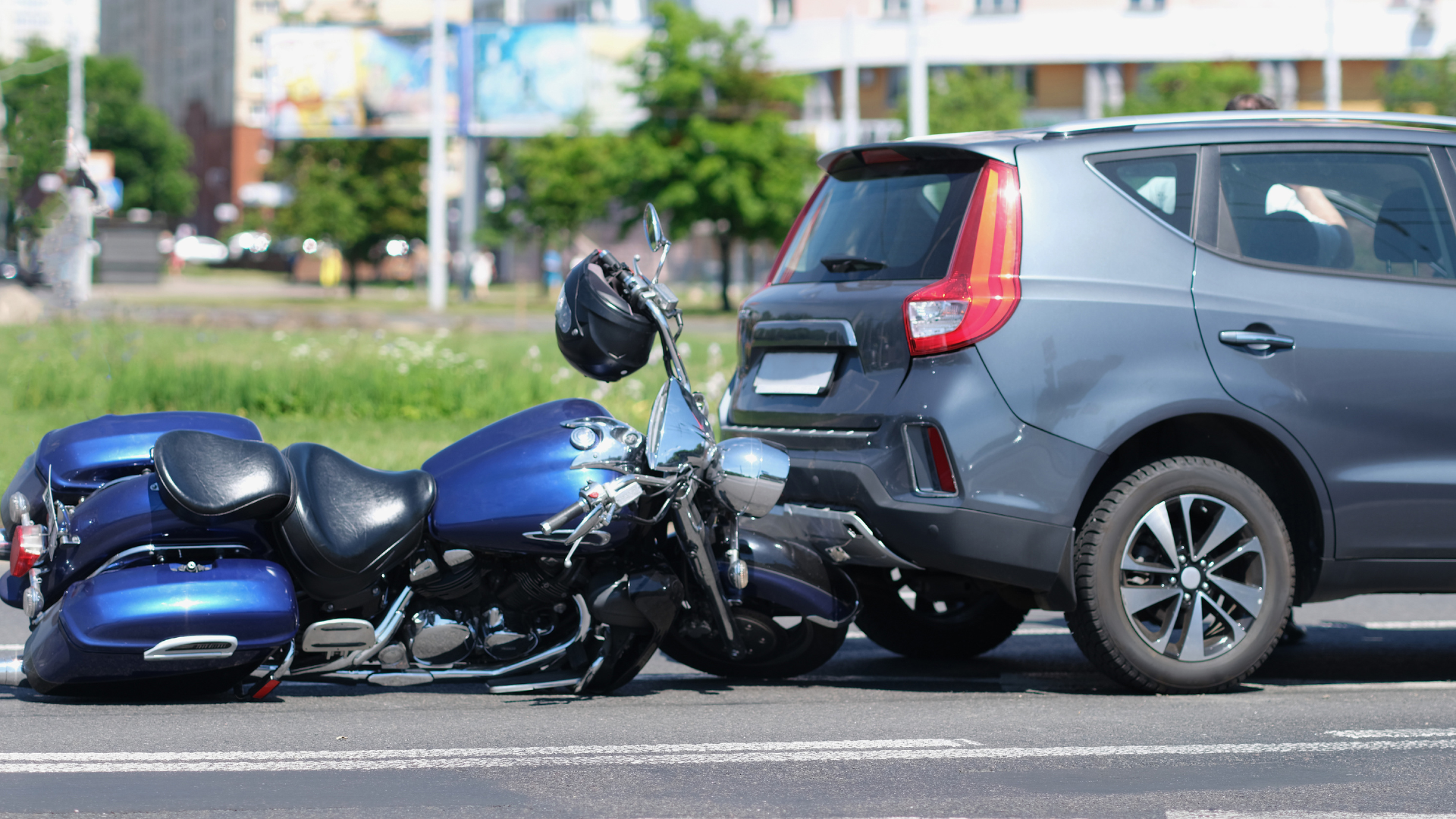
Establishing fault after an Ontario motorcycle accident requires more than pointing to a damaged bike and an injured rider. California law looks at how each person involved acted in the moments before the crash and how those choices lined up with basic rules of the road. Riders often face closer scrutiny in this analysis, which makes it important to ground fault discussions in specific conduct and reliable evidence rather than assumptions.
We approach fault by examining what drivers and riders actually did in the situation they faced. We review traffic controls, lane positions, sightlines, and speeds, then compare those details to what the law requires. This framework lets us show why the other party holds responsibility in your Ontario motorcycle accident case and how we should address any arguments about shared fault.
Understanding Negligence in an Ontario Motorcycle Accident Case
Negligence is the legal term for carelessness that leads to harm. In an Ontario motorcycle accident case, negligence might involve a driver failing to yield, turning left across your path, changing lanes without a proper check, or following too closely. The question is whether the driver acted as a reasonably careful person would under similar circumstances and whether that conduct caused the crash.
Driver Duties Toward Motorcyclists
Drivers must treat motorcycles as full vehicles and give riders the same space and consideration they’d give any other driver. That includes checking blind spots, using mirrors, respecting right of way, and allowing enough following distance. When a driver ignores these duties and collides with a bike, those failures can form a strong basis for liability in an Ontario motorcycle accident claim.
Rider Responsibilities Under Traffic Laws
Riders also have responsibilities, such as obeying signals, controlling speed, and using proper lanes. Most motorcyclists understand how much more exposed they are and ride with that in mind. When we build your case, we show how your decisions fit within reasonable riding behavior so fault doesn’t shift to you based on general beliefs about motorcycles rather than your actual conduct.
Why Clear Narratives Matter
A simple, consistent account of how the crash happened helps link legal rules to real events. When your description matches the physical evidence and the applicable traffic laws, it becomes easier to explain why the other party should be held responsible for the Ontario motorcycle accident. We work with you to craft that narrative in a way that stays accurate and easy to follow.
Shared Responsibility And Comparative Fault for Riders
California uses comparative fault, which means more than one person can share responsibility for the same crash. If a court or insurer decides you carry a percentage of fault, your recovery can be reduced by that percentage. This concept often appears in Ontario motorcycle accident claims when insurers argue that the rider should have reacted differently or anticipated the danger sooner.
How Fault Percentages Affect Recovery
When comparative fault comes into play, decision makers assign percentages to each party. If they place thirty percent of the responsibility on you and your damages total a certain amount, your recovery would be reduced by that thirty percent. We work to keep that number grounded in the facts and argue against inflated percentages that don’t reflect what actually happened in your Ontario motorcycle accident case.
Responding To Claims That Blame The Rider
Insurers sometimes suggest that the rider was speeding, weaving, or ignoring conditions, even when they have limited proof. We push back by highlighting inconsistencies, pointing to independent evidence, and showing how your behavior fits with reasonable riding practices. That response helps prevent blame shifting that could unfairly reduce your compensation.
Using Expert Opinions On Crash Dynamics
In some cases, it’s helpful to work with experts who can analyze angles, speeds, and braking patterns. These professionals use physical evidence and accepted methods to reconstruct what likely happened. Their opinions can support your description of the Ontario motorcycle accident and counter claims that rely more on speculation than on measurable data.
Evidence That Helps Prove Fault in an Ontario Motorcycle Crash
Evidence is the foundation of any fault analysis. In an Ontario motorcycle crash, useful evidence often includes photographs, police reports, witness statements, medical records, and sometimes digital data. Each piece adds detail to the overall picture and helps explain how the collision occurred and who should be held responsible.
Scene Photos And Physical Markers
Photos show where vehicles ended up, what the surrounding area looked like, and whether there were skid marks or debris patterns. These images can clarify questions about lanes, distances, and lines of sight. We use them to illustrate how the Ontario motorcycle crash unfolded and to check whether accounts from others match what the physical markers suggest.
Medical Records And Injury Patterns
The way your body was injured can sometimes support your version of the crash. Certain impacts produce familiar injury patterns, and providers may record how you describe the incident. We review these records to see how they line up with your account and use them to support the sequence of events you’ve described in your Ontario motorcycle accident case.

Settling a Motorcycle Accident Case in Ontario
Settling a motorcycle accident case in Ontario usually involves a series of discussions rather than a single moment of agreement. Those discussions depend on the strength of your evidence, the clarity of your medical and work records, and the way insurers view fault and long term impact. A settlement should reflect both what you’ve already gone through and what your providers reasonably expect in the future.
Our attorneys aim to guide you through that process with a clear understanding of what each step means. We help organize your case, present it in a way that makes sense, and talk through how specific offers compare to your actual situation. You stay involved in every major decision while we handle the detailed work of preparing and presenting your Ontario motorcycle accident case for resolution.
Preparing an Ontario Motorcycle Accident Case for Settlement
Preparation lays the groundwork for meaningful settlement talks. A well prepared case doesn’t just list bills and injuries; it connects the crash to your medical care, work changes, and daily life in a way that others can understand. That structure gives you a stronger position when negotiations begin.
Organizing Medical And Work Records
We gather medical records, visit summaries, and work documents into a clear timeline that shows how your Ontario motorcycle accident changed your health and income. This organization allows insurers to see the progression from collision to treatment to current status, rather than trying to piece the story together from scattered pages.
Describing Day To Day Changes Clearly
Numbers alone don’t explain what it feels like to live with the effects of a crash. We help you describe how your routine has shifted, which activities have become harder, and how symptoms show up in your everyday life. Those descriptions, when linked to medical findings, give important context to your Ontario motorcycle accident injury claim.
Setting Realistic Settlement Goals
Part of preparation involves talking honestly about what a fair range might look like based on your injuries, your recovery, and available coverage. We discuss possible outcomes openly so you can set realistic goals for settlement without undervaluing your claim or assuming that any particular result is guaranteed.
Balancing Certainty And Flexibility
A settlement offers certainty, while continued litigation carries more risk and potential reward. We help you weigh those tradeoffs in the context of your own needs and comfort level so you can decide how much flexibility you’re comfortable with when you evaluate offers.
Negotiation Strategies in Ontario Motorcycle Accident Claims
Negotiation is not about arguing for the sake of argument; it’s about presenting your Ontario motorcycle accident case in a way that shows why your requested amount makes sense. Strong negotiation relies on preparation, clear communication, and a willingness to keep talking when early offers fall short.
Timing Settlement Discussions Around Recovery
It often makes sense to wait until your medical situation has stabilized before making final decisions, since settlement usually closes the door on future claims for the same injuries. We discuss timing with you and your providers so we can enter negotiations with a reasonably complete picture of your needs without delaying longer than necessary.
Evaluating Offers Against Long Term Needs
Each offer is measured against both your current losses and your expected future needs. We look at ongoing treatment, work limitations, and non economic harm to see whether a proposed amount fits your Ontario motorcycle accident case. If it doesn’t, we talk about how to respond and what information might help support a higher figure.
When Settlement Talks Are Not Enough
Most Ontario motorcycle accident cases resolve through settlement, but some require additional steps when negotiations stall or offers stay unreasonably low. Deciding whether to file or continue with litigation involves practical questions about time, risk, and potential benefit.
Understanding The Role Of Litigation
Litigation adds structure to the process through deadlines, discovery, and, in some cases, trial. It can encourage more serious settlement talks, but it also requires more of your time and attention. We explain what litigation would look like for your Ontario motorcycle accident case so you can decide whether it fits your situation and tolerance for a longer process.
Staying Involved In Key Decisions
You remain central to every major decision, from whether to accept an offer to whether to file suit. Our role is to give you clear, honest advice based on the law and our experience, then support the path you choose. That partnership helps ensure that any resolution reflects both the strength of your case and your own priorities.

Connect With Miracle Law About Your Accident Today
An Ontario motorcycle accident can leave you with a lot of moving pieces and not much time to step back and look at the whole picture. It’s reasonable to want a clearer sense of where you stand before you decide how far to take your claim or what kind of outcome you’re willing to accept. Choosing what to do after a motorcycle accident in Ontario isn’t just a legal decision, it’s a personal one. You deserve real answers, clear expectations, and a team that respects your goals.
At Miracle Law, we believe that every rider’s case should be built on facts, not formulas. That starts with a conversation where you can lay out what happened, what’s changed for you, and what you hope to achieve. Whether you’re dealing with uncooperative insurers, unclear fault, or just want to be sure your rights are protected, we’re ready to help. If you’d like to discuss your Ontario motorcycle accident and see what your claim might involve, you can call Miracle Law at (888) 843-5290 or contact us online. Our team is here to help you move forward in a way that fits your needs and goals.