
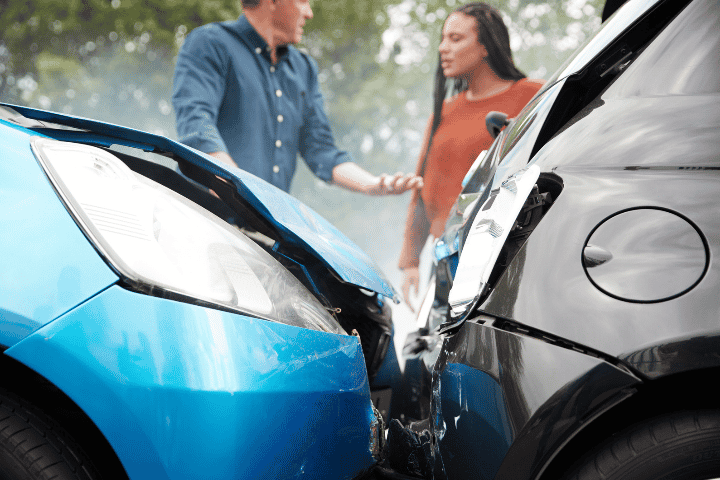
The insurance company calls it “shared fault.” To you, that could mean being left with medical bills you cannot afford. You may be certain the other driver caused the crash, yet find yourself defending your actions every time the adjuster calls. How is fault determined in a car accident in California, and how do you challenge the blame you believe is unfair?
At Miracle Law, our car crash lawyers help injured Rancho Cucamonga drivers build a case that gives their account the support it needs. Our founder, Tamar Miot, previously defended insurance companies. We draw on that experience to investigate collisions, challenge unsupported allegations, and push back against efforts to reduce compensation.
Key Takeaways
- Fault Requires Proof of Negligence: Determining fault in California involves proving duty of care, breach of duty, causation, and resulting damages.
- California Uses Pure Comparative Negligence: You can still recover financial compensation even if you are partially—or mostly—at fault, though your recovery will be reduced by your percentage of responsibility.
- Evidence Is Essential: Police reports, witness testimony, video footage, vehicle data, and expert accident reconstruction help counter unfair blame from insurance companies.
Contact Miracle Law to discuss your crash and the blame being placed on you.
How Do You Determine Who Is at Fault in a Car Accident?
Proving fault in a car accident in California means showing evidence of negligence. You must show that a driver failed to use reasonable care and that this failure caused your injuries or property damage.
Duty of Care
Every driver has a duty to use reasonable care to protect others on the road. This means watching for vehicles and pedestrians, maintaining vehicle control, following traffic laws, and responding to traffic and road conditions.
Breach of Duty
A driver breaches their duty of care when they fail to drive as carefully as the circumstances require. Examples include:
- Unsafe speed. A driver travels too fast for the traffic, weather, or visibility conditions, even if they stay within the posted limit.
- Distracted driving. A driver reads a text or focuses on a navigation screen instead of watching the road.
- Following too closely. A driver leaves too little space to stop safely when traffic ahead slows or stops.
- Unsafe lane changes. A driver moves into another lane without checking blind spots or making sure there is enough room.
- Failure to yield. A driver turns left across approaching traffic without waiting for a safe opening.
- Ignoring traffic signals. A driver runs a red light or proceeds through a stop sign without stopping.
- Impaired driving. A driver operates a vehicle while alcohol, drugs, or medication impairs their judgment, coordination, or ability to react safely.
- Fatigued driving. A driver continues driving despite being too tired to stay alert, maintain their lane, or respond safely to traffic.
A breach establishes what the driver did wrong. The next step is showing how that failure caused the collision and your injuries.
Causation
California requires that negligence be a “substantial factor” in causing harm, meaning its contribution cannot be merely remote or trivial. Evidence used to show negligence can include the following:
- Police reports. An officer’s report may document statements, vehicle positions, damage, and findings about the collision.
- Witnesses. A witness can help clarify a driver’s actions. An account from someone with no connection to either driver can be especially valuable when the other driver disputes your version of events.
- Photos and video. Scene photographs can preserve lane markings, debris, and damage patterns that help explain how the impact occurred. We also seek available video before recordings are erased.
- Traffic laws. We compare the drivers’ actions with the rules governing speed, turns, and lane changes. To establish liability, we must connect the unsafe conduct to the harm you suffered.
- Vehicle data. A vehicle’s event data recorder may capture its speed and whether the brakes were applied before impact. This information can help confirm or contradict a driver’s account of their actions before the crash.
- Accident reconstruction. An expert can analyze vehicle damage, tire marks, and other physical evidence to explain how the collision unfolded. In a chain-reaction crash, that analysis can help establish the order of impacts and each driver’s role.
When investigating a car accident fault in Rancho Cucamonga, we check whether the drivers’ accounts match the evidence at the scene.
Damages
Your claim must also establish the harm the collision caused, including medical expenses, lost income, vehicle damage, and pain and suffering. Treatment records help connect your injuries to the crash, while wage records and repair estimates document financial losses.
When your injuries require ongoing care, we work with medical providers to plan future treatment so your claim reflects the recovery still ahead.
How Does Car Accident Fault in Rancho Cucamonga Affect Recovery?
Your compensation generally decreases by your percentage of fault, but sharing blame does not automatically prevent you from recovering damages. California follows a rule called pure comparative negligence, under which:
- Several parties can share fault. In a three-car collision, one driver might be 50% responsible, another 30%, and you 20%. Those percentages depend on how each person’s negligence contributed to the harm.
- Your share reduces your recovery. If your damages total $100,000 and you are 20% at fault, your recovery is reduced by $20,000. That leaves $80,000 you could pursue from the other responsible parties.
- Being mostly at fault does not rule out compensation. Even if you are 70% responsible, you may still pursue the remaining 30% of your damages from another negligent party. Unlike other states, California does not cut off your claim simply because your share of fault exceeds 50% or 51%.
These examples explain the fault calculation; they do not guarantee payment. Available insurance and the responsible parties’ ability to pay can also affect what you collect.
Contact Miracle Law for Help Proving Fault in a Car Accident in California
You don’t need to prove who caused the crash before contacting Miracle Law. Our attorneys can explain how fault is determined in a car accident in California and review what the available evidence means for your claim.
We’ve recovered over $25 million for clients, and we bring that experience to your case, keeping you connected throughout. You have direct access to your attorney to discuss your concerns, understand the insurer’s position, and get advice about your next steps.
Contact Miracle Law for a free consultation about your Rancho Cucamonga accident. We’ll listen to your account, review your claim’s status, and explain how we can help.
Legal References Used to Inform This Page
To ensure the accuracy and clarity of this page, we referenced official legal and other resources during the content development process:

 Español